Nosfet Aero Review: Specs, Price and Who It's For
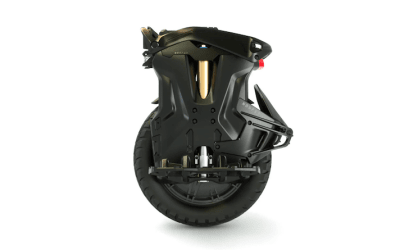
Nosfet is not one of the legacy EUC brands most shoppers already know, and that is exactly why search interest around it is worth paying attention to right now. Riders are typing "nosfet aero", "nosfet apex" and "nosfet xeno" into Google without a clear sense of who the company is or what separates the three wheels — which means whoever answers that question first in plain, specific terms gets the click. The Aero is the model driving most of that traffic, so it is the right place to start.
The Aero is Nosfet's mid-tier, do-everything wheel: a 2000W-class EUC built around a magnesium unibody frame, real suspension, and a spec sheet aimed squarely at commuters who also want to take it off-road on weekends. It sits below the Apex and Xeno in Nosfet's three-model range, but for most riders it is the one that actually makes sense to buy.
Nosfet Aero: Specs at a Glance
| Spec | Nosfet Aero |
|---|---|
| Motor | 2000W nominal, 4000W peak |
| Battery | 1110Wh, 126V, Samsung 50S cells |
| Top speed | 55 km/h (34 mph), tested on a closed circuit |
| Default safe speed | 25 km/h, adjustable in the app |
| Range (manufacturer) | Up to 51 km (32 miles) |
| Weight | 24.5 kg (54 lb) |
| Max load | 120 kg (265 lb) |
| Tire | 14 x 3 in (3.0-10) |
| Suspension | 70mm travel, adjustable bidirectional damping |
| Water resistance | IPX6 |
| Charge time | 2-3 hours at 126V / 5A |
| Price | $1,999 (US) / €2,199 (EU) |
Those numbers put the Aero squarely in the same bracket as other 100V+ suspension wheels that have been popular over the past two seasons — strong enough for daily 20-30 km commutes with room to spare, and light enough at 24.5 kg that carrying it up a few flights of stairs isn't a workout.
Ride Feel: What the Suspension Actually Buys You
The headline spec isn't the battery, it's the 70mm suspension travel with adjustable bidirectional damping. On a hardtail EUC, every pothole, expansion joint and curb cut gets transmitted straight through the pedals into your ankles; riders who commute on real city streets rather than smooth bike paths notice this within the first week. The Aero's suspension is tuned to soften that without turning the wheel mushy or unstable at speed, and because the damping is adjustable, heavier riders or anyone planning to add cargo can stiffen it rather than living with excess sag.
The suspension is the actual reason to pick the Aero over a similarly priced hardtail wheel — the extra weight and cost only pay off if you ride on rough pavement often enough to feel it.
Stability at the top end benefits too. A wheel that's fighting to keep its tire planted over broken asphalt at 30 km/h feels far less confident than one where the suspension is absorbing that energy, and that translates directly into rider confidence, not just comfort.
Range, Charging and Everyday Use
A 1110Wh pack and a 32-mile manufacturer range figure mean most single-battery EUCs in this class land somewhere between 20-25 real-world miles once you account for hills, stop-and-go traffic, colder weather and a rider who doesn't baby the throttle. That's still enough for a round-trip commute in the 10-12 mile range with a comfortable safety margin, though anyone doing longer daily distances should plan to charge at both ends of the day rather than relying on a single top-up.
Charging itself is straightforward: 2-3 hours on the included 126V/5A charger gets you back to full, and the Smart BMS is worth knowing about specifically because it's the same battery management approach Nosfet carries across its lineup — a detail that matters more on a startup-era brand than an established one, since a competent BMS is what keeps a high-voltage pack safe over hundreds of charge cycles.
- Daily commuters under 15 miles round trip: single charge covers it comfortably.
- Longer commutes or weekend trail rides: plan on a midday top-up.
- Cold-weather riders: expect noticeably less than the rated 32 miles.
Where the Aero Sits in Nosfet's Lineup
Search demand around "nosfet" as a bare brand term, plus scattered queries for "nosfet apex" and "nosfet xeno," suggests shoppers are comparing all three models before deciding, so it's worth being clear about what separates them.
The Apex is the performance flagship: a 3200W continuous / 8000W peak motor, a 2700Wh pack at 151.2V, and a manufacturer-claimed range up to 54 miles, built around the same internal electronics and firmware as the well-regarded Sherman L. Nosfet markets a top speed figure as high as 75 mph for the Apex — treat that as a lab number, not a real-world riding speed; very few EUC riders anywhere sustain speeds close to that safely, and doing so requires serious off-road gear and a closed course. At $3,399, the Apex is priced and positioned for riders who already know they want a track-and-trail wheel, not a first EUC.
The Xeno sits above even the Apex as Nosfet's flagship, currently taking preorders at €2,999 (down from €3,249) with full specifications not yet widely published. Anyone specifically searching for "nosfet xeno" right now is buying on brand trust and preorder pricing rather than a finished spec sheet — worth knowing before putting down a deposit.
For most riders outside of dedicated off-road or track use, the Aero's 2000W motor and 70mm suspension already cover the gap between "comfortable commuter" and "capable weekend wheel" without the Apex's price jump or the Xeno's preorder uncertainty.
Price and Availability
The Aero currently lists at $1,999 through US retailers taking preorders, and at €2,199 through European retailers with stock in hand — a gap worth noting if you're price-shopping across regions, since currency conversion alone doesn't explain the full difference. As with most EUC brands selling outside their home market, expect delivery windows to vary by retailer, and confirm whether import duties are included in the listed price before ordering from outside your own region.
Who Should Buy the Nosfet Aero
The Aero makes the most sense for riders who already have some EUC experience — enough to handle a 24.5 kg wheel confidently at speed — and who commute or ride recreationally on pavement that isn't perfectly smooth. It's less suited to a first-ever EUC purchase, where a lighter, lower-power wheel is usually the safer and cheaper way to learn, and less suited to dedicated off-road riders, where the Apex's bigger battery and motor headroom will hold up better to sustained hard use.
Bottom Line
Nosfet is a newer name, but the Aero's spec sheet — 2000W motor, 1110Wh battery, real adjustable suspension, IPX6 sealing, magnesium frame — isn't a budget-brand shortcut version of the established competition; it's a genuinely mid-to-upper-tier commuter wheel at a price that undercuts several equivalent options from longer-established manufacturers. For riders past the beginner stage who want comfort on rough streets without stepping up to Apex-level power and price, it's worth shortlisting.