 Reviews
Surron company and 2026 vision
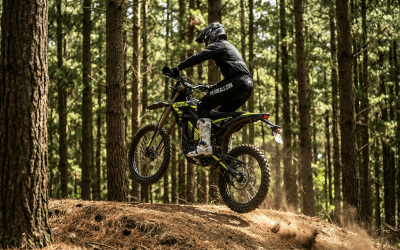
Surron has grown from a specialist electric motorcycle manufacturer into one of the most recognizable brands in the modern electric off-road market. The company has built its reputation around lightweight motorcycle platforms, instant electric torque, compact dimensions, and a riding experience that sits somewhere between a traditional dirt bike, a trials machine, and a high-performance electric bicycle. Instead of simply replacing a gasoline engine with an electric motor, Surron has focused on developing motorcycles specifically around the advantages of electric propulsion. This approach has helped the brand attract a broad community of riders, including off-road enthusiasts, commuters, younger riders, and performance-focused customers looking for a quieter and lower-maintenance alternative to conventional motorcycles. The Surron philosophy is particularly visible in the company's approach to weight and chassis design. Electric motorcycles can become extremely heavy when equipped with large battery packs, but Surron has consistently emphasized relatively compact platforms and centralized weight distribution. This makes its bikes highly maneuverable on trails and technical terrain, where a lightweight motorcycle can be easier to control than a much larger conventional enduro bike. Electric power also provides immediate torque without the need for a traditional gearbox or clutch, giving Surron motorcycles strong acceleration and predictable power delivery. Depending on the model and configuration, riders can also benefit from selectable riding modes, regenerative braking, sophisticated suspension components, and electronically managed motor systems. For 2026, Surron's product strategy demonstrates how quickly the electric off-road motorcycle segment is developing. Rather than relying on a single model, the company is building a family of motorcycles designed for different riding styles and levels of performance. The lineup ranges from compact and relatively lightweight machines designed for agility and accessibility to larger, significantly more powerful motorcycles intended for demanding off-road riding. This broader approach allows Surron to compete across several parts of the electric motorcycle market while maintaining the characteristics that made the brand popular in the first place. One of the best-known motorcycles in the range is the Surron Light Bee, which remains an important part of the company's identity. The model has become particularly popular because of its relatively small size, low weight, responsive handling, and strong electric acceleration. For the 2026 model year, the Light Bee is listed with a 72V 35Ah battery, up to 10 kW of maximum power, an indicated top speed of around 80 km/h, and a claimed range of up to 75 km when riding at 40 km/h under specified conditions. These figures make the Light Bee attractive to riders who want an agile electric motorcycle that can be used on trails, private property, and other appropriate riding environments without the bulk of a full-size enduro motorcycle. The Light Bee's biggest advantage is arguably not its headline power figure but the overall balance of the motorcycle. Its compact dimensions make it easy to move around tight trails, while the electric motor provides immediate response when climbing hills or accelerating out of corners. The motorcycle's relatively simple drivetrain also means there is no conventional multi-speed gearbox or clutch to manage. For experienced riders, this can make the bike extremely playful, while newcomers can appreciate the straightforward controls. The enormous aftermarket surrounding the Light Bee has also contributed to its popularity, with riders frequently modifying suspension, wheels, brakes, bodywork, batteries, and other components to suit different riding styles. Above the Light Bee, Surron offers the Ultra Bee platform, which is designed to provide a more substantial motorcycle experience while retaining the company's emphasis on low weight and electric performance. The Ultra Bee is physically larger and more capable of handling demanding terrain, making it a natural choice for riders who want something closer to a full-size off-road motorcycle. Its chassis and suspension are designed for more aggressive riding, while the electric powertrain delivers the immediate acceleration that has become one of Surron's defining characteristics. The 2026 Ultra Bee HP represents a significant step toward high-performance electric off-road motorcycles. Surron lists the model with a claimed maximum output of 24.5 kW and maximum torque of 520 N·m, along with a top speed of approximately 95 km/h. The company also lists a claimed range of up to 115 km at 40 km/h under specified test conditions. These numbers place the Ultra Bee HP in a very different category from smaller electric trail bikes. It is intended for riders who want substantial acceleration, greater high-speed capability, and a chassis capable of handling demanding off-road environments. The Ultra Bee HP is also an example of how Surron is moving beyond the idea that electric motorcycles are primarily lightweight alternatives for casual trail riding. With higher power output, stronger components, and more sophisticated electronic systems, motorcycles such as the Ultra Bee HP are aimed at riders who expect serious performance. Instant electric torque can be particularly useful in off-road conditions, where traction and throttle control are critical. Instead of waiting for an engine to build revs, the electric motor can deliver power immediately, allowing the rider to respond quickly to changes in terrain. Another notable part of Surron's evolving range is the Hyper Bee. This motorcycle takes the company's lightweight philosophy in a more compact direction. At around 39 kg, the Hyper Bee is designed to be highly portable and maneuverable while still providing a strong electric performance for its size. Surron lists up to 8 kW of motor power for the model, giving it considerably more capability than a conventional electric bicycle while maintaining a very lightweight platform. The Hyper Bee is particularly interesting because it demonstrates that Surron is not simply increasing the size and power of every new motorcycle. Instead, the company is exploring different combinations of weight, power, battery capacity, and chassis dimensions. This variety is becoming increasingly important as the electric motorcycle market matures. Riders no longer have to choose between a small electric bike with limited performance and a heavy, expensive full-size electric motorcycle. Manufacturers such as Surron are creating several categories within the electric off-road segment, allowing customers to select a motorcycle based on their experience, riding environment, desired range, and performance expectations. A lightweight model can be ideal for tight woodland trails and technical terrain, while a more powerful motorcycle can provide the acceleration and stability needed for faster open trails. Battery technology is another major factor in Surron's 2026 lineup. Unlike gasoline motorcycles, where fuel capacity and engine efficiency largely determine range, electric motorcycles depend heavily on battery capacity, riding speed, terrain, rider weight, temperature, and riding style. Consequently, manufacturers typically provide range figures under specific test conditions rather than as a universal real-world number. For potential buyers, this means that a claimed range should be viewed as a reference point rather than a guarantee. Aggressive riding, steep terrain, frequent acceleration, and high speeds can reduce range considerably compared with controlled testing at a steady lower speed. Charging and battery management are therefore important parts of the ownership experience. Electric motorcycles eliminate many of the maintenance requirements associated with gasoline engines, such as oil changes, spark plugs, fuel systems, and conventional exhaust components. However, they introduce their own considerations, including battery charging, long-term battery health, software and electronic systems, and proper storage. For riders who regularly use their motorcycle for short trail sessions or local riding, the convenience of charging at home can be a major advantage. For longer adventures, however, planning around charging availability remains important. One of the most appealing characteristics of Surron's motorcycles is their quiet operation. Electric powertrains produce significantly less mechanical and exhaust noise than gasoline engines, which can make them more pleasant to ride in appropriate environments and less disruptive to surrounding areas. This does not mean that electric motorcycles can be ridden anywhere, however. Riders still need to follow local laws, property restrictions, trail regulations, registration requirements, and noise or environmental rules where applicable. The legal classification of a Surron can also vary depending on the model, equipment, jurisdiction, and how the motorcycle is being used. The 2026 range also illustrates the increasing importance of electronic control systems in electric motorcycles. Because the motor, battery, and control unit are closely integrated, manufacturers can use software to influence throttle response, power delivery, regenerative braking, traction behavior, and riding modes. This gives riders the ability to adapt the motorcycle to different conditions. A softer power mode can be useful on slippery or technical terrain, while a more aggressive setting can provide stronger acceleration on open trails. As electric motorcycle technology develops, software is likely to become just as important to the riding experience as traditional mechanical components. Surron's success also comes from the culture that has developed around its motorcycles. The bikes have become popular not only as transportation but as platforms for customization and experimentation. Owners frequently upgrade suspension, brakes, wheels, tires, batteries, controllers, handlebars, and protective equipment. This aftermarket ecosystem allows riders to transform a standard motorcycle into something highly specialized. One rider might prioritize lightweight trail performance, while another might focus on acceleration, range, or competition-oriented suspension setup. This flexibility has helped make Surron particularly visible within the rapidly growing electric off-road community. Looking at the 2026 product line as a whole, Surron's direction is clear: the company is expanding the definition of what a lightweight electric motorcycle can be. The Light Bee continues to represent accessibility and agility, the Ultra Bee platform moves toward more serious full-size off-road performance, and the Ultra Bee HP pushes power and speed even further. Meanwhile, the Hyper Bee demonstrates that there is still room for extremely lightweight machines that prioritize maneuverability and compact dimensions. Rather than producing one motorcycle for every customer, Surron is creating a range of platforms with different priorities. For riders considering a 2026 Surron, the most important decision is therefore not simply choosing the motorcycle with the highest power number. The right model depends on how and where the bike will be used. Riders who spend most of their time on tight trails may benefit more from low weight and agility than from maximum horsepower. Those who ride faster and more aggressively may prefer the larger Ultra Bee platform and its additional performance. Riders looking for maximum portability and a highly compact machine may find the Hyper Bee more appealing. Battery capacity, expected range, charging access, suspension requirements, local regulations, and budget should all be considered alongside motor output. Ultimately, Surron's 2026 lineup reflects a broader shift taking place across the motorcycle industry. Electric motorcycles are moving beyond being experimental alternatives and are becoming increasingly capable performance machines. Improvements in batteries, motors, controllers, suspension, and chassis design are allowing manufacturers to build motorcycles that can deliver impressive acceleration while remaining remarkably lightweight. Surron has played an important role in bringing this concept to a mainstream off-road audience, and its 2026 products show the company's continued emphasis on combining electric performance with compact, rider-focused chassis design. With multiple platforms covering different levels of size and performance, the 2026 Surron range gives riders more choice than ever before. Whether the priority is lightweight trail riding, high-performance off-road use, or simply experiencing the instant response of an electric motorcycle, the lineup demonstrates how far Surron's technology has developed. The company is no longer defined by a single lightweight electric bike; it is building a broader electric motorcycle ecosystem aimed at riders who want performance, agility, modern technology, and a fundamentally different riding experience from traditional gasoline-powered motorcycles.